Althena Brings Handcrafted Style to Every Product Label and Card
I sat at my kitchen table with a pile of kraft paper tags, a fresh ink cartridge in my printer, and a feeling that my packaging needed something warmer. I had been using the same clean sans serif for months, and while it looked professional, it didn’t whisper handmade in the way I wanted. That evening I opened my design file, swapped the header text to Althena, and hit print. The moment the first tag came out of the tray, I knew I had found the voice my little shop had been missing. The loops had a gentle irregularity, the terminals tapered naturally, and the whole word felt like it had been written in my own hand, only better.
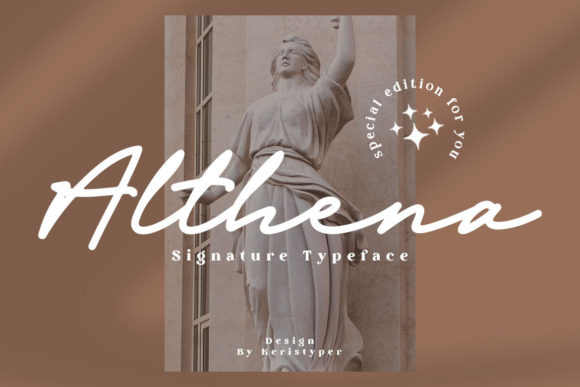
Althena is a script typeface drawn with an authentic handwriting pen, and it carries exactly the kind of organic charm that handmade sellers and printable creators crave. It is not stiff, not overly polished, and not trying to be a perfect calligraphy font. Instead it lands somewhere between a personal note and a refined signature. That balance makes it incredibly versatile for real products, from candle labels to wedding invitations to the small tags you tie onto a tote bag at a market.
A Font That Feels Like It Belongs in Your Hands
When you look at Althena, you see pen pressure, slight slants, and the kind of unevenness that makes handwriting feel alive. The uppercase letters have a confident sweep, while the lowercase ones connect with a natural rhythm that keeps words readable even at smaller sizes. For a maker who prints labels at home or cuts designs on a machine, that readability is everything. I tested Althena on a sheet of small round stickers for a batch of lavender soy candles, and every letter stayed crisp. The word “Lavender” read clearly, and the descender on the “r” added just enough flair without crowding the tiny circle.
This font works beautifully as a display typeface for short phrases, names, and decorative wording. I have used it for a birthday invitation header, a farmhouse sign that says “Gather,” and a wedding welcome board where the couple’s names needed to feel both elegant and approachable. In each case, Althena did not fight for attention. It sat comfortably on the layout and invited people to read it.
From Candle Labels to Wedding Invitations
The real beauty of Althena is how it adapts across product categories. On a candle label, it brings warmth to a simple glass jar. On a greeting card, it makes the sentiment feel handwritten even when you printed it at home. For wedding invitations, it pairs naturally with a clean sans serif font for the fine print, letting the couple’s names take center stage in that lovely pen-struck style.
I recently designed a set of seasonal gift tags for a holiday shop update. The phrase “Merry & Bright” in Althena looked like I had written each tag with a metallic marker, but it took me minutes to arrange on a print-and-cut sheet. The font’s moderate stroke width means it works on small tags as well as larger signs, which is a rare flexibility in the script world. I have also used it on a shirt design where the word “Wildflower” curved across the back, and the cut lines on my machine followed the letterforms perfectly.
For printable wall art, Althena gives a modern but timeless feel. I created a simple 8x10 print with the word “Home” in the script and a smaller serif font underneath reading “where your story begins.” The contrast lifted the whole piece, and the handwriting warmth made it feel like a custom commission rather than a template. Customers responded to that authenticity, and I noticed they described the print as cozy and personal in their reviews.
How Althena Affects Product Quality and Customer Recognition
Typography is one of the fastest ways to signal quality in a handmade product. When you use a premium font like Althena, the perceived care and intention behind the item go up. A jar of bath salts with a plain label reads as average. That same jar with a handwritten script label reads as artisan. The font does the heavy lifting of building trust before the customer even opens the lid.
Brand consistency also gets a boost when you use the same typeface across your packaging, tags, social media graphics, and thank you cards. Althena has enough personality to become a signature element of your shop identity without overwhelming the other design assets. I now use it on my logo, my product hang tags, and the preview images I post on my shop. Customers start to recognize that handwritten look as part of the brand, and that recognition turns into loyalty over time.
Emotional appeal is another layer. Handwritten fonts evoke intimacy and effort. When someone receives a package with a tag written in Althena, they feel like the maker took a moment to address them personally. That emotional connection often leads to repeat purchases and word-of-mouth recommendations. It is not about tricking the customer into thinking you wrote every tag by hand, but about choosing a typeface that honestly reflects the handmade ethos of your work.
Readability Advice for Cutting Machines and Small Stickers
If you use a cutting machine like a Cricut or Silhouette, Althena is a reliable choice because the letters are not too thin or too ornate. I recommend testing a word at your intended size before cutting a full batch. For names or short phrases on stickers, keep your font size above 10 points to maintain legibility. For larger signs or shirt designs, the letters hold their shape well even when scaled up.
One practical tip I learned the hard way is to check the spacing between certain letter pairs. Althena includes natural kerning, but if you are working with a word that has a tall letter next to a descender, you might want to adjust the tracking slightly. That little tweak prevents overlapping when you cut vinyl or print small labels. On printed cards and mockup previews, the default spacing is usually perfect, so the adjustment is mainly for physical cuts.
For listing images and digital previews, Althena renders beautifully on screen. The contrast between the script and a clean sans serif font makes your product photos look polished without extra editing. I often pair Althena with a simple sans serif like Montserrat or a light serif like Lora for body text. That pairing keeps the focus on the decorative headline while making the rest easy to read.
Font Pairing and Production Possibilities
Pairing Althena with a clean sans serif font is my go-to for most projects. The script handles the emotional weight, and the sans serif handles the details. For boutique packaging, I use Althena for the product name and a simple sans for ingredients or care instructions. For wedding stationery, I pair it with a light serif font for the body copy, which adds a touch of tradition without competing with the script.
If you want a more casual feel, you can pair Althena with another handwritten font that has a different weight, but I recommend keeping it simple for readability. A bold display font works well for accent words on a sign, but the script should always be the star in any design where warmth matters.
Seasonal craft designs are another area where Althena shines. I use it for fall harvest tags, Christmas gift labels, Valentine’s Day cards, and spring garden markers. The font’s natural handwriting style fits the changing seasons because it feels handmade and timely. For digital template previews, I layer Althena over a soft texture or a watercolor background, and the letterforms pop without losing their organic edge.
Licensing and File Considerations for Selling Products
Before you start selling physical products, templates, printables, SVG-style designs, or merchandise using Althena, check the commercial font licensing carefully. Script Amp offers clear guidelines on what is and is not allowed, and it is worth reading the details so you stay compliant. The font typically comes in OTF and TTF formats, which work on both Mac and Windows, and many versions include basic multilingual support for accented characters.
I always confirm whether my license covers printed merchandise, digital downloads, and cut files. Some fonts require an extended license for certain commercial uses, and being upfront about that protects your shop and your customers. Althena is a premium font, and investing in the right license is part of treating your craft like a real business. It also ensures you can reuse the font across multiple products without worrying about restrictions.
The file package may include alternate characters, ligatures, and swashes that give you even more creative control. I love using the alternate versions of the first and last letters to make each word feel slightly different from the next. That variety keeps my products from looking too uniform, which is important when customers are browsing handmade goods and looking for something unique.
A Typeface That Grows with Your Shop
Althena has become one of those fonts I reach for again and again. It works for a single label or a full wedding suite. It fits a farmhouse sign and a modern tote bag. It gives my products a cohesive look without making every design feel the same. For any crafter, handmade seller, or printable creator who wants their words to feel personal and polished, Althena is a solid addition to your design toolbox.
The next time you sit down to design a label, a card, or a shop sign, try swapping your usual font for Althena. Print one test piece and see how the letters sit on the page. I think you will find, like I did, that the right script font can transform an ordinary product into something that feels truly made by hand.